
The Philosophical World of Washrooms
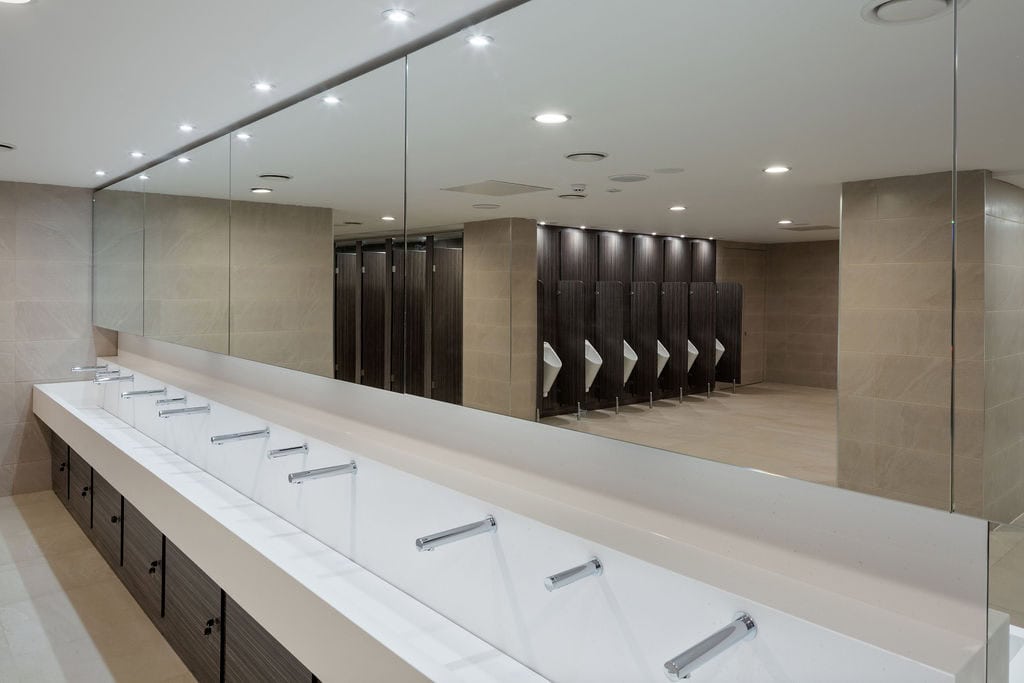
Concept Washroom digs deep into what lies behind these most ubiquitous of spaces and finds a few surprises….
As you might expect, we (previously known as Concept Cubicle Systems) spend a lot of time thinking about washrooms. Primarily our role is in helping architects and designers create functionality, comfort, privacy and an all-round pleasant experience. It is after all, something we all have a stake in, as part of our common humanity. We have planned a ‘World of Washrooms’ blog series to examine the sheer variety and sometimes weird planet of humanity’s bathroom experiences.
But we don’t generally start our blogs on washroom design talking about philosophy. So, you can imagine our surprise when we discovered an important lecture from the 2011 architecture congress at Pamplona, by none other than world-famous Slovenian philosopher Slavoj Žižek. This short piece was titled ‘The hermeneutics of toilets’ and is quite an eye opener, if a little ‘earthy’, so please be warned. For clarification (we had to google the term ourselves!) hermeneutics is defined as ‘the theory and methodology of interpretation’ – usually applied to old texts and documents.

Credit | Slavoj Žižek Boitempo 2022
In this instance, Mr. Žižek was using this approach to explore how different cultures consider their sanitaryware, particularly toilets. Without going into graphic detail, the way that the toilet itself is designed for use depends on where you are in the world. Germany, France and England express three different existential attitudes: reflective thoroughness (German), revolutionary hastiness (French), utilitarian pragmatism (English).
These attitudinal differences can perhaps be summed up through some familiar and more than a bit tongue-in-cheek cultural motifs:
- German excellence through attention to detail based on cool-headed analysis – sort of ‘Vorsprung durch technik’ in the washroom setting.
- French passion for focusing on getting the necessary done and back to enjoyment, inspired by the admirable national focus on ‘Joie de vivre’.
- British no-nonsense efficiency, but recognising the need for comfort, robust style and functionality. Along the lines of William Morris’ statement: “Have nothing that you do not know to be useful, or believe to be beautiful”
Of course, cultures differ considerably and change over time. Roman citizens were happy for toilets and baths to be a communal meeting place.
In the present this is still with us, albeit through relaxation and spas. A perfect example being the Caracalla spa in Baden Baden on the edge of the Black Forest of South-west Germany. Named after the Roman emperor more familiarly known as Marcus Aurelius Antoninus, it is an example of the elevation of public facilities that we could learn from in more modest situations. There are also more classical spas in the same town according to your taste.
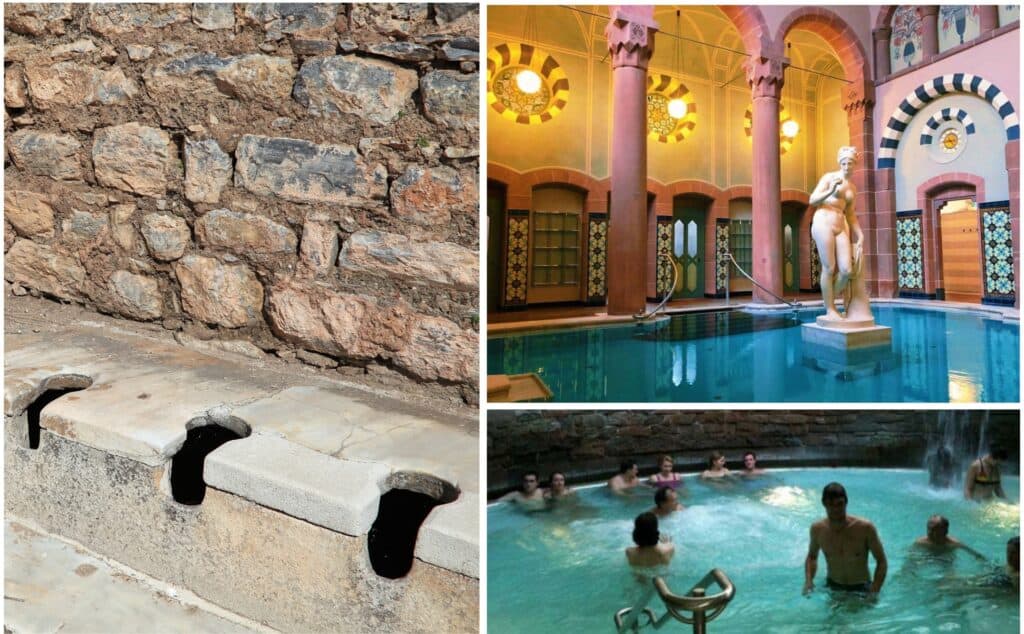
From clockwise: Credit | Smithsonian Magazine 2022, Caracalla Spa Baden Baden, Spa Baden Baden
This is an experiential heritage that persists to this day as a hallmark of excellence and desirability. The focus on luxury bathrooms in boutique hotels or in the ratio of en suites to bedrooms in designer homes act as a signifier of quality and attention to detail. It is as much about personal experience as purely functional requirements – and why not? According to a recent survey reported in The Huffington Post, the average Brit spends 3.5 hours a week on the loo – that adds up to an incredible one and a half years over a lifetime!
To put this in perspective, that is more time than many people spend exercising. These facts alone should encourage us to give far more consideration to washrooms. They represent an opportunity to create environments that, using colour and configuration, promote calm, contemplation, safety – also energy and even excitement. Wherever we are in the world, humans have the same need for well-designed, private spaces to attend to the most basic human needs.
The world of washrooms is far more complex than we ever imagined, and washrooms are difficult to get right because they carry huge significance in the mind of the user.
There is a subtle art in choices of layout, colour and accessories that can add up to far more than the sum of their parts. This takes experimentation, visualisation, getting a feel for texture and colour combinations to create the right ambiance whilst meeting the client brief. At Concept Washroom, we are constantly looking for new ways to make these choices easier, because we understand the complexity of these often-misunderstood spaces.
We at believe that much more can be achieved than basic English utilitarian pragmatism. We can aim much higher for beauty, colour and contemplation.
That’s got to be worth three and a half hours a week of anyone’s time? What do you think?